What Your Online Doctor Learns About You in the First Few Minutes—and How

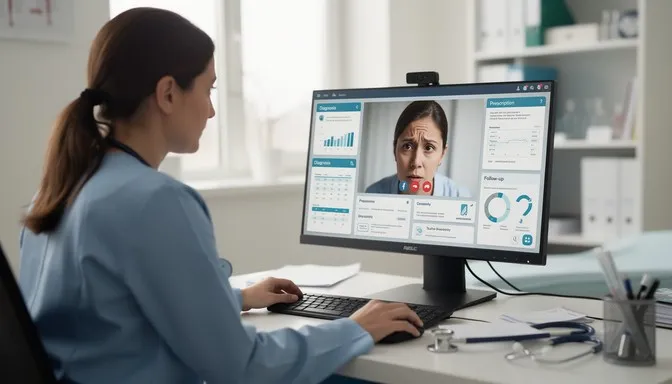
Photo: doctor conducting video call telemedicine consultation with patient on laptop, via img.freepik.com
There is a common misconception that a shorter appointment means a less thorough one. For patients new to telemedicine, the efficiency of a virtual consultation can feel almost unsettling—as if something important must be getting skipped. In reality, licensed physicians who practice online medicine have spent considerable time refining the art of the rapid, yet comprehensive, medical history. What looks like brevity is, more often than not, precision.
At Doctor7 Online, our physicians conduct thousands of virtual consultations each month. The clinical process behind each one is more structured than it may appear from the patient's side of the screen.
The Problem With Missing Cues—and How Physicians Solve It
In a traditional office setting, a physician begins gathering information the moment a patient walks through the door. Gait, posture, skin tone, breathing patterns, and even the way a person lowers themselves into a chair all contribute to the clinical picture before a single question is asked. Online, those passive observations disappear.
Experienced telemedicine physicians compensate by shifting the burden of observation from passive to active. Rather than waiting to notice something, they ask about it directly. A question like "Do you feel short of breath when you're speaking right now?" replaces what an in-person doctor might simply hear. "Have you noticed any changes in your skin color or the color of your fingernails?" substitutes for a visual scan. This deliberate questioning is not a workaround—it is a clinical skill in its own right, and one that online physicians develop with practice.
The Architecture of a Strategic Medical History
Physicians are trained to gather patient histories using structured frameworks. One of the most widely used is the mnemonic OLDCARTS—Onset, Location, Duration, Character, Aggravating factors, Relieving factors, Timing, and Severity. In a telemedicine context, this framework becomes even more central to the consultation because it ensures no critical dimension of a symptom is overlooked.
A skilled online physician does not simply ask "Where does it hurt?" They work through each dimension systematically, often within the span of a few targeted questions. "When did this start, and has it been constant or does it come and go?" addresses onset, duration, and timing simultaneously. "Does anything make it better or worse—like eating, lying down, or physical activity?" captures aggravating and relieving factors in a single breath.
This compression is intentional. The goal is not to rush the patient but to gather layered information efficiently, leaving room for the follow-up questions that often yield the most diagnostically useful details.
Why Follow-Up Questions Matter More Online
In telemedicine, the follow-up question is arguably the most powerful clinical tool available. Patients describing their own symptoms tend to use imprecise language—"I feel off," "my stomach hurts," "I've been really tired." An in-person physician might observe additional signs that help clarify these vague descriptions. An online physician must use language itself to narrow the differential.
When a patient says they have been fatigued, a well-trained telemedicine doctor does not move on. They probe: Is the fatigue present in the morning or does it worsen throughout the day? Does rest improve it? Has there been any change in sleep quality, appetite, or weight? Is the fatigue accompanied by mood changes, temperature sensitivity, or muscle weakness?
Each answer narrows the diagnostic field. Fatigue that worsens with exertion and improves with rest points in a different clinical direction than fatigue that is constant, unrelieved by sleep, and accompanied by cold intolerance. These distinctions—surfaced entirely through questioning—are what allow a licensed physician to arrive at a clinically sound assessment without ever being in the same room as the patient.
The Role of Patient-Reported Data
Modern telemedicine does not rely on conversation alone. Patients consulting through platforms like Doctor7 Online are often asked to complete intake forms prior to their appointment. These forms capture medication lists, known allergies, relevant medical history, and a preliminary description of the presenting concern. By the time the physician joins the call, they have already reviewed a meaningful amount of context.
This front-loading of information serves a specific purpose: it allows the physician to spend consultation time on clarification and clinical reasoning rather than basic data collection. Instead of asking whether the patient has a history of hypertension, the physician can ask how well-controlled it has been recently, and whether the current symptoms represent anything new in that context.
Wearable devices and home monitoring tools add another layer. A patient who arrives at a virtual visit with a week's worth of blood pressure readings, a logged record of blood glucose levels, or a documented resting heart rate trend gives their physician quantitative data that would otherwise require an office visit to obtain. In many cases, this data is more reliable than a single in-office measurement taken under the stress of a clinical environment.
Reading Between the Lines: Verbal and Contextual Cues
Without physical proximity, online physicians become highly attuned to what might be called the texture of a patient's account. How a person describes their symptoms—their word choices, the certainty or hesitation in their voice, the sequence in which they introduce information—can be clinically informative.
A patient who leads with "I know this is probably nothing, but..." before describing chest discomfort may be minimizing a symptom that warrants careful attention. A patient who describes a new headache in exhaustive, anxious detail may need reassurance as much as clinical evaluation. Experienced telemedicine physicians read these cues and adjust their approach accordingly—asking more direct questions when they sense minimization, or slowing the pace of the conversation when a patient seems overwhelmed.
This attunement is not incidental. It is a learned skill that reflects the broader clinical competency required to practice medicine effectively in a virtual environment.
How Patients Can Help the Process
The efficiency of a telemedicine consultation is a shared responsibility. Patients who arrive prepared—with a clear account of their primary concern, a list of current medications, and any relevant recent observations about their symptoms—allow their physician to move more quickly from history-gathering to clinical assessment.
It is also worth noting that detail matters more than brevity on the patient's side of the conversation. If a symptom started three days ago rather than "recently," saying so matters. If it is worse after meals, not just "sometimes," that specificity is clinically significant. The more precise the patient's account, the more useful the physician's questions become.
The Takeaway
A virtual consultation with a licensed physician is not a compressed version of in-person care—it is a different mode of delivering the same standard of care, adapted for a different environment. The medical history gathered in the opening minutes of a telemedicine visit reflects years of clinical training applied to a context that demands both efficiency and precision.
At Doctor7 Online, every consultation is conducted by a licensed physician who understands that thoroughness and speed are not in conflict. With the right questions, the right tools, and a prepared patient, five minutes of structured history-taking can open a remarkably complete clinical window.