Prescription Boundaries in Telemedicine: The Clinical Logic Behind What Your Online Doctor Will—and Won't—Prescribe
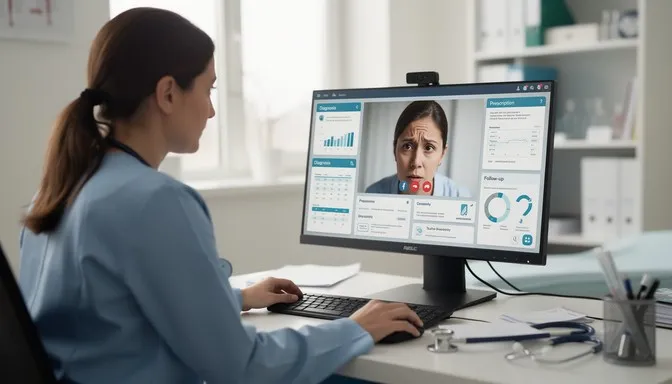
Photo: doctor reviewing prescription on computer screen telemedicine consultation, via images.stockcake.com
When a patient logs into a virtual visit expecting the same prescribing latitude they experienced during a recent ER trip, the difference can feel frustrating—even arbitrary. Why would a board-certified physician, viewing your symptoms through a secure video connection, be unable to prescribe a medication that a hospital physician handed over without hesitation just weeks ago?
The answer lies not in the credentials of the doctor on your screen, but in the clinical environment, the regulatory framework, and—most importantly—the science of safe prescribing. Understanding these distinctions does not diminish the value of telemedicine. If anything, it underscores why thoughtful prescription boundaries are a feature, not a flaw, of responsible virtual care.
The Environment Changes Everything
An emergency room is a controlled clinical environment equipped to monitor patients in real time. Physicians there can order immediate lab work, observe a patient's physical presentation, check vital signs continuously, and intervene within seconds if a medication produces an adverse reaction. That infrastructure fundamentally expands what a physician can safely do.
An online consultation, by contrast, takes place without physical examination tools, without on-site diagnostics, and without the ability to respond to a sudden adverse event. This is not a criticism of telemedicine—it is simply a description of a different clinical context, one that demands a different risk calculus when it comes to prescribing.
Licensed physicians practicing through platforms like Doctor7 Online are trained to work within these parameters. Their caution around certain medications is not a limitation of their skill; it reflects an accurate understanding of what can and cannot be safely assessed through a screen.
Controlled Substances: A Legal and Clinical Boundary
Among the most commonly misunderstood restrictions in telemedicine involves controlled substances—opioid pain relievers, benzodiazepines, stimulants prescribed for ADHD, and similar medications classified under the Controlled Substances Act.
Under normal federal regulations, the Ryan Haight Online Pharmacy Consumer Protection Act requires that a physician conduct at least one in-person evaluation before prescribing controlled substances via telemedicine. Emergency exceptions were granted during the COVID-19 public health emergency, and ongoing regulatory discussions continue to shape this space. However, the baseline principle remains: these medications carry significant risks of dependence, misuse, and life-threatening interactions, and those risks require the kind of thorough physical and psychological evaluation that a video call cannot fully replicate.
This does not mean patients managing chronic pain, anxiety disorders, or attention-deficit conditions are without options through telemedicine. Many online physicians can evaluate these conditions, document clinical history, and provide referrals or bridge care strategies while coordinating with in-person providers for controlled substance management.
Antibiotics: Not All Prescriptions Are Created Equal
A common misconception is that antibiotics are straightforward medications—something any doctor should prescribe freely based on described symptoms alone. In reality, antibiotic stewardship is one of the most critical issues in contemporary medicine, and telemedicine physicians take it seriously.
For well-defined, commonly encountered bacterial infections—uncomplicated urinary tract infections, certain cases of strep throat confirmed through symptom pattern, or clear presentations of bacterial conjunctivitis—online physicians can and do prescribe appropriate antibiotics with confidence. These conditions have established clinical criteria that translate well to a virtual evaluation.
However, complex or ambiguous infections are a different matter. A patient describing symptoms that could indicate a deep tissue infection, a respiratory illness that might be viral or bacterial, or a skin presentation that requires visual and tactile assessment may receive a referral rather than a prescription. Prescribing a broad-spectrum antibiotic without adequate information risks treatment failure, antibiotic resistance, and masking a more serious underlying condition.
Complex Medication Regimens and Specialist Territory
Certain prescribing decisions require longitudinal data—blood work, imaging results, cardiac monitoring, or a documented history spanning multiple visits. Initiating a new anticoagulant, adjusting a chemotherapy-adjacent medication, or prescribing a biologic agent for an autoimmune condition falls squarely into this category.
Online physicians are not positioned to begin these regimens from scratch during a first virtual encounter, and responsible ones will say so clearly. What they can do is review existing regimens, flag potential drug interactions, communicate with a patient's specialist, and ensure continuity of care during gaps in access to in-person providers.
What Online Physicians Handle with Confidence
It is equally important to recognize the breadth of conditions that telemedicine physicians manage effectively—and prescribe for—every day.
- Urinary tract infections: Symptom-based diagnosis and antibiotic prescribing are well-supported for uncomplicated cases in adult women.
- Seasonal allergies and sinusitis: Antihistamines, nasal corticosteroids, and decongestants are routinely prescribed following virtual evaluation.
- Skin conditions: Topical treatments for eczema, acne, rosacea, and minor infections are commonly managed online, particularly when patients can share clear photographs.
- Mental health support: Non-controlled medications for depression and anxiety, such as SSRIs and SNRIs, are within the prescribing scope of online physicians following a thorough evaluation.
- Chronic condition management: Patients with stable diabetes, hypertension, or thyroid disorders often find that telemedicine is an efficient way to manage refills and monitor status between in-person visits.
Setting Realistic Expectations Before Your First Virtual Visit
Patients who approach telemedicine with an accurate understanding of its prescribing parameters are far better served than those who arrive expecting a digital replica of an emergency room. The physicians available through Doctor7 Online are licensed, experienced, and committed to evidence-based care—which is precisely why they operate within boundaries designed to protect patients, not frustrate them.
If you are managing a condition that has historically required controlled substances or complex regimens, come prepared to discuss your documented history and your existing care team. If you are seeking treatment for a new, acute symptom, be open to the possibility that your online physician may recommend an in-person evaluation—not because telemedicine has failed, but because the right tool for the right problem is always the goal.
The medication limitations of telemedicine are not gaps in the system. They are evidence that the physicians on the other side of your screen are thinking carefully about your safety—which is exactly what you would want from any doctor, anywhere.