Your Virtual Visit, on the Record: Understanding Privacy, Access, and Data Rights in Telemedicine

Photo: Wellcome Institute for the History of Medicine; Arnold, Ken, 1960-; Porter, Roy, 1946-2002; Wilkinson, Lise, Lady, No restrictions, via Wikimedia Commons
When you log on for a virtual physician consultation, you may be focused on describing your symptoms or reviewing a treatment plan. What you may not be thinking about is the detailed record being created in real time—a clinical document that captures far more than the conversation itself. In the world of telemedicine, electronic health records (EHRs) are not simply digital versions of paper charts. They are dynamic, interconnected data repositories that carry significant implications for your privacy, your future care, and your legal rights as a patient.
Understanding what that record contains, how long it is retained, and who is permitted to access it is no longer optional literacy for the modern patient. It is a fundamental aspect of informed healthcare participation.
What Actually Gets Documented During an Online Consultation
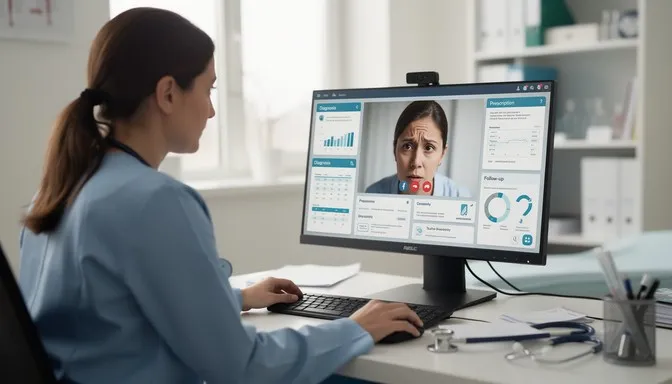
A telemedicine visit with a licensed physician generates a clinical record that is, in many respects, functionally equivalent to what would be produced during an in-person encounter. The documentation typically includes the patient's chief complaint, a review of symptoms, relevant medical and medication history, the physician's clinical assessment, any diagnoses rendered, and the treatment plan—including prescriptions, referrals, or follow-up recommendations.
What distinguishes the telemedicine record is the additional layer of platform-specific metadata that often accompanies it. This may include the date, time, and duration of the session; the technology platform used to facilitate the visit; and, in some cases, notes about the quality or limitations of the remote assessment. If diagnostic tools were employed—such as patient-submitted photographs, remote monitoring device outputs, or shared laboratory results—those inputs are typically incorporated into the record as well.
Some telemedicine platforms also log session-level data that, while not strictly clinical, exists within the same digital environment. Patients should be aware that the distinction between clinical documentation and platform data is not always clearly delineated in the terms of service they agree to when registering for a virtual care service.
How Telemedicine EHRs Differ from Traditional Medical Records
Conventional medical records have historically been siloed within individual practices or hospital systems. Accessing them across different providers often required signed release forms, faxed requests, and considerable administrative effort. Telemedicine, by contrast, operates within a more fluid digital infrastructure—one designed for interoperability, remote access, and data portability.
This connectivity offers genuine benefits. A physician consulting with you online can, with appropriate authorization, access records from prior providers, review recent lab work, or coordinate with a specialist across state lines. The continuity of care that results can be clinically meaningful.
However, that same connectivity introduces expanded exposure. A record that exists in an interoperable digital system can, in principle, be accessed by a broader range of parties than a paper chart locked in a filing cabinet. The question of who that includes—and under what circumstances—is where federal law and platform policy become critically important.
HIPAA in the Telemedicine Context: What the Law Actually Guarantees
The Health Insurance Portability and Accountability Act (HIPAA) remains the primary federal framework governing the privacy and security of protected health information (PHI) in the United States. Any telemedicine platform operating with or through licensed physicians is classified as either a covered entity or a business associate under HIPAA, meaning the law's Privacy Rule and Security Rule apply directly to how your health data is handled.
Under HIPAA, you retain several foundational rights with respect to your telemedicine records. You have the right to access and obtain copies of your records. You have the right to request corrections to inaccurate information. You have the right to receive an accounting of disclosures—a log of who has accessed your records and for what purpose. And you have the right to file a complaint with the U.S. Department of Health and Human Services if you believe your privacy has been violated.
What HIPAA does not do is prohibit all sharing of your health information. Covered entities may disclose PHI without your explicit consent for treatment, payment, and healthcare operations purposes. This means your records can be shared with other treating physicians, with insurers processing claims, and with certain administrative functions—all without requiring you to sign a separate release each time.
The Gaps: Where Telemedicine Privacy Protections May Fall Short
For all its protections, HIPAA was drafted in 1996 and has not kept pace with the technological realities of modern telemedicine. Several meaningful gaps deserve patient attention.
First, not every health-related app or digital platform qualifies as a HIPAA-covered entity. If you use a wellness application, symptom checker, or remote monitoring tool that operates independently of a licensed physician or insurer, that platform may collect sensitive health data entirely outside HIPAA's jurisdiction. The privacy policy governing that data is determined by the company's own terms of service—not federal law.
Second, data retention policies vary considerably among telemedicine providers. While HIPAA requires covered entities to retain records for a minimum of six years from the date of creation or last use, some platforms maintain data for significantly longer periods. Patients are advised to review the specific retention policies of any telemedicine service they use, as these policies directly affect how long their health information remains accessible within that system.
Third, secondary uses of de-identified data present a nuanced concern. HIPAA permits covered entities to use or sell health data that has been stripped of identifying information for research, analytics, or commercial purposes. While de-identification standards are defined in the law, critics have noted that large datasets can sometimes be re-identified through cross-referencing with other data sources.
Practical Steps to Protect Your Digital Medical Privacy
Being an informed patient in the telemedicine era means taking an active role in managing your health data. The following measures are practical and accessible.
Review privacy policies before registering. Before creating an account with any telemedicine platform, locate and read the platform's HIPAA Notice of Privacy Practices. This document is legally required and outlines exactly how your information may be used and shared.
Request your records regularly. Under HIPAA, you are entitled to access your records in a timely manner. Periodically requesting copies of your telemedicine consultation notes allows you to verify their accuracy and maintain your own complete health history.
Ask about data-sharing arrangements. It is entirely appropriate to ask your telemedicine provider whether they share data with third parties, including pharmaceutical companies, insurers, or research institutions, and under what conditions.
Use strong authentication practices. Because your telemedicine records exist in a digital environment, the security of your account credentials directly affects the security of your health information. Enable multi-factor authentication wherever it is offered.
Understand your right to restrict. In certain circumstances, you have the right to request restrictions on how your PHI is used or disclosed. While covered entities are not always required to honor these requests, asking is both appropriate and within your rights.
A Shared Responsibility
Telemedicine represents a significant advancement in how Americans access licensed physician care—removing geographic barriers, reducing wait times, and expanding the reach of qualified medical expertise. But every consultation that takes place through a screen generates data, and that data carries both value and vulnerability.
At Doctor7 Online, our licensed physicians operate within a fully HIPAA-compliant framework, and patient privacy is treated as a clinical obligation, not merely a regulatory checkbox. Understanding the contours of that framework—what it protects, where its limits lie, and how you can advocate for your own privacy—is knowledge that serves every patient who chooses to engage with modern virtual care.