What You Stop Noticing About Yourself — And How a Virtual Doctor Visit Can Change That

Photo: Stefanpavelka, CC BY 4.0, via Wikimedia Commons
There is a particular kind of blindness that comes with living inside your own body. Fatigue that has been present for so long it feels like a personality trait. A headache that arrives every Sunday evening, reliably, like an unwanted houseguest. A shortness of breath on the stairs that you have quietly reclassified as "just getting older." These are the things that rarely make it onto the checklist you mentally prepare before a doctor's appointment — the things you have, without realizing it, decided are not worth mentioning.
What telemedicine is beginning to reveal is that this kind of self-editing happens far more often in traditional clinical settings than most patients recognize. And that virtual care, for reasons both psychological and practical, may be uniquely positioned to cut through it.
The Exam Room Effect — and Why It Works Against You
Walk into a physician's office and something subtle shifts. You are now in a clinical environment, a space designed around efficiency and procedure. The clock on the wall is not decorative — it reflects the reality that your physician has a full schedule, that the average primary care appointment in the United States runs between fifteen and eighteen minutes, and that both of you, consciously or not, are working within that constraint.
Under those conditions, patients make triage decisions in real time. They lead with the most acute complaint. They downplay the secondary ones. They omit the ones that feel vague or embarrassing or too difficult to explain quickly. Research on patient-physician communication has consistently shown that patients interrupt themselves — or are interrupted — within the first two minutes of describing their concerns. What gets lost in those early moments often stays lost.
The result is a kind of inadvertent collaboration in which both patient and physician focus on the presenting problem and move on. It is not a failure of care. It is a structural limitation of the environment.
Why Being at Home Changes What You Say
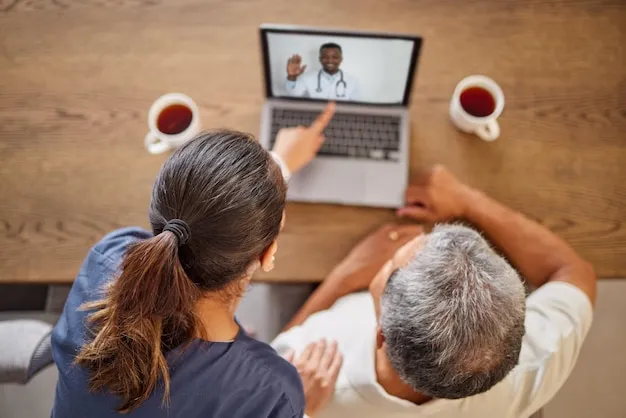
A virtual consultation conducted through a platform like Doctor7 Online looks different from the moment it begins. You are seated in your kitchen, or your home office, or the quiet corner of your bedroom. You are not wearing a paper gown. There is no antiseptic smell triggering a low-level anxiety response. The psychological distance between "patient" and "person" narrows considerably.
Physicians who conduct remote consultations regularly note that this environmental shift produces a measurable difference in how patients communicate. People are more likely to mention the thing they almost didn't bring up. They are more likely to describe symptoms in their natural context — "it usually happens after dinner" or "it gets worse when I'm stressed at work" — because they are physically surrounded by that context. The home, in other words, is full of clinical information that the exam room never sees.
There is also the matter of time perception. Without a waiting room full of other patients, without the visual cue of a physician reaching for the door handle, many patients report feeling less rushed during virtual visits. That perceived spaciousness — even when the actual appointment length is similar — tends to produce more complete conversations.
The Patterns That Emerge When You're Asked the Right Questions
Consider a scenario that plays out with some regularity in virtual care settings. A patient logs in to discuss what they believe is a straightforward issue — persistent indigestion, say, or recurring tension headaches. In the course of the consultation, the physician asks about sleep. About stress levels. About what the patient's typical week looks like. About whether the symptom has changed over time.
These are not unusual questions. But in a relaxed, unhurried setting, they tend to generate more honest, more detailed answers. And sometimes those answers reveal something the patient had not connected: that the indigestion reliably follows nights of poor sleep, which reliably follow high-pressure days at work, which have been happening consistently for eight months. What appeared to be a digestive complaint begins to look like a stress-mediated pattern with implications for cardiovascular health, sleep quality, and long-term wellbeing.
The physician did not uncover something hidden. The patient knew all of these facts individually. What the virtual visit provided was the structure and the space to connect them.
Honest Reporting and the Role of Comfort
There are certain categories of health concern that patients are statistically less likely to raise in person. Mental health symptoms rank prominently among them. So do issues related to sexual health, substance use, weight, and anything the patient fears will be met with judgment. The social distance of a screen — paradoxically — can make these conversations feel safer.
This is not a trivial clinical advantage. Conditions like depression, anxiety, alcohol use disorder, and type 2 diabetes are frequently underreported in primary care settings, not because physicians fail to ask, but because patients are not yet ready to answer honestly in a face-to-face environment. Virtual consultations lower that threshold for many people. And earlier, more accurate disclosure leads directly to earlier, more targeted care.
Licensed physicians consulting through telemedicine platforms are trained to recognize this dynamic and to create the kind of conversational environment that invites fuller disclosure — not through pressure, but through the deliberate, unhurried quality of the exchange.
What This Means for How You Approach Your Next Virtual Visit
Understanding the clinical value of the virtual environment suggests a different way of preparing for an online appointment. Rather than arriving with a single, rehearsed chief complaint, consider taking a few minutes beforehand to reflect more broadly. What have you been brushing off? What have you mentioned to a family member but never to a doctor? What has changed in the past year that you have simply adapted to?
Bring those observations into the conversation. A licensed physician on a platform like Doctor7 Online is not there only to address the immediate problem — they are there to understand you as a patient with a health history, a lifestyle, and patterns that may be pointing toward something worth examining.
The exam room asks you to be efficient. The virtual visit, at its best, asks you to be complete.
The Bigger Picture
Telemedicine is often framed in terms of convenience — and that framing is not wrong. The ability to see a licensed physician without taking half a day off work, without driving forty-five minutes to a clinic, without sitting in a waiting room for an hour past your appointment time, is a genuine and meaningful benefit.
But the case for virtual care runs deeper than logistics. The environment in which a medical conversation takes place shapes the quality of that conversation. And when patients are comfortable, unhurried, and in surroundings that reflect their actual daily lives, they tend to tell more of the truth — including the parts they had stopped recognizing as relevant.
Sometimes the most important thing a physician can do is create the conditions in which a patient finally says the thing they have been meaning to say for months. Virtual care, practiced well, does exactly that.