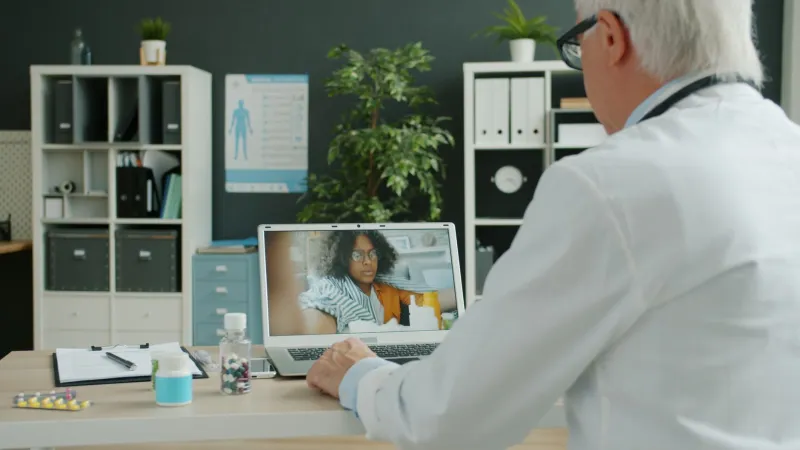
What Your Virtual Doctor Can't See Without Your Help: The Hidden Importance of Medical History in Online Care
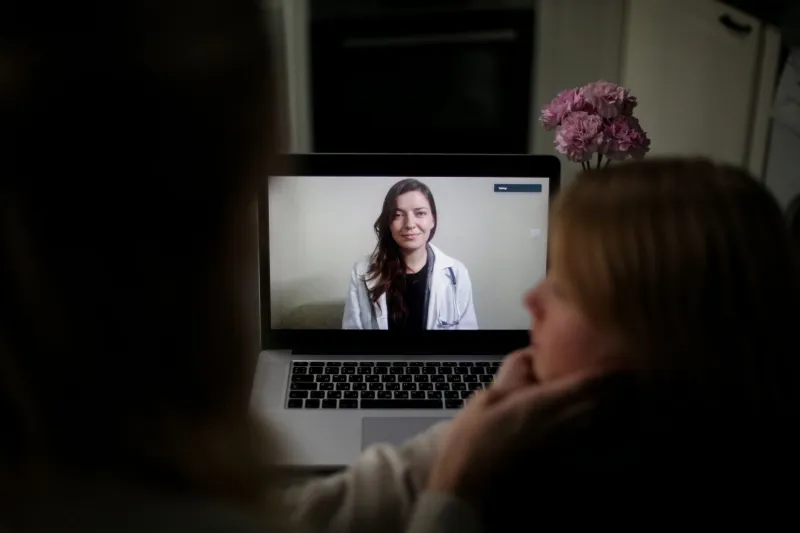
There is a quiet assumption embedded in how most Americans think about their primary care physician: that the doctor knows them. After years of annual checkups, the occasional urgent visit, and a handful of managed conditions, an in-person physician accumulates a living impression of a patient—one built not just from charts, but from physical presence, observed changes, and the kind of institutional memory that develops over time.
Telemedicine, by design, operates differently. And that difference carries consequences that patients rarely consider before logging on for their first virtual consultation.
The paradox at the center of online medical care is this: the format that promises the most convenience may also demand the most preparation. A licensed physician consulting with you through a screen does not have the benefit of years of face-to-face familiarity. What they have—and what they depend upon far more heavily than their clinic-based counterparts—is documentation. Your documentation.
The Physical Examination Is Only Part of What a Doctor Reads
When a physician sees a patient in person over many years, they develop a clinical baseline that is difficult to articulate but remarkably useful. They notice that you've lost weight since your last visit without being told. They observe the slight tremor in your hands that wasn't there eighteen months ago. They register the change in your complexion, your gait, the way you hold your shoulders when you're in discomfort.
None of that is available to a virtual physician meeting you for the first time—or even to one who has seen you several times through a screen. The camera captures only what it captures. The physician on the other end is skilled, licensed, and attentive, but they are working within a constrained informational environment. To compensate, they must lean harder on what is available: your stated history, your documented records, and your ability to communicate what your body has been doing.
This is not a flaw in telemedicine. It is simply the clinical reality that patients and providers must both acknowledge and actively manage.
Why Documentation Becomes a Clinical Tool
In a traditional practice, a physician's office maintains your records in a system they control. Your previous lab results, imaging reports, specialist notes, and medication changes are typically accessible within that same network. The physician can pull your chart and trace a pattern across years of visits before you've finished describing your current symptoms.
In the telemedicine environment, that continuity is not guaranteed. A virtual physician at a platform like Doctor7 Online may be seeing you for the first time, or may have access only to the records you have provided or that have been shared through integrated health systems. The Electronic Health Record (EHR) infrastructure in the United States has improved significantly in recent years, but interoperability—the ability for different systems to communicate seamlessly—remains inconsistent across providers, hospitals, and states.
The practical result is that your online doctor may be working from an incomplete picture unless you take deliberate steps to fill it in. And an incomplete picture, in medicine, is never a neutral condition.
What a Virtual Physician Is Actually Trying to Reconstruct
During an online consultation, a licensed physician is not simply responding to the symptom you've described. They are attempting to build a clinical context around that symptom—one that accounts for your age, your existing conditions, your current medications, your family history, your allergies, and the trajectory of your health over time.
Without that context, a symptom like fatigue could point in dozens of directions. With it, the same symptom narrows quickly and meaningfully. A physician who knows you have a history of thyroid dysfunction, take a medication that can affect iron absorption, and reported similar symptoms two years ago that resolved after a dosage adjustment—that physician can move with precision. One who knows only that you are tired today cannot.
This is why virtual physicians often ask more questions, and more detailed questions, than patients expect. The questions are not inefficiency. They are the physician's method of reconstructing, in real time, the clinical context that an in-person doctor might absorb passively over years.
Preparing for a Virtual Visit: What Patients Should Bring
The patients who get the most from online consultations are, almost without exception, the ones who arrive prepared. That preparation does not require medical expertise—it requires organization and the willingness to think ahead.
Before a virtual visit, consider compiling the following:
A current medication list. Include the name of each medication, the dosage, how frequently you take it, and who prescribed it. Do not omit supplements, over-the-counter medications, or anything you take only occasionally. Drug interactions are a real concern, and your virtual physician cannot identify them without complete information.
Relevant recent lab work or imaging results. If you have had bloodwork, an X-ray, an MRI, or any diagnostic testing in the past one to two years, bring those results or be prepared to describe what was found. If the results are accessible through a patient portal, consider downloading and uploading them to your virtual care platform in advance.
A summary of existing diagnoses. If you manage any chronic conditions—diabetes, hypertension, asthma, depression, or others—be explicit about them. Do not assume your online doctor has access to your previous provider's notes.
A timeline of your current concern. When did the symptom begin? Has it changed in character or intensity? What makes it better or worse? Have you tried anything to address it? The more precisely you can answer these questions, the more efficiently your physician can work.
Your family medical history. Particularly for cardiovascular disease, certain cancers, diabetes, and mental health conditions, family history carries significant diagnostic weight. A brief summary is more useful than you might expect.
The Role of Patient Self-Reporting in Virtual Care Quality
Telemedicine places a higher burden of self-reporting on the patient than traditional care does—and that burden is not evenly distributed. Patients who are health-literate, organized, and communicative tend to receive more targeted care in virtual settings. Those who are less familiar with their own medical details, or who assume their doctor already has the information they need, may inadvertently limit the quality of care they receive.
This is not a criticism of patients. It is an observation about how the format works, and an argument for why health platforms and virtual care providers have a responsibility to guide patients through the preparation process. At Doctor7 Online, the intake process is designed with this in mind—prompting patients to share relevant history before the consultation begins, so that the physician's time with you is spent on analysis and care rather than basic information gathering.
Continuity Is Possible—But It Requires Intention
The absence of a long-term physical relationship does not mean the absence of continuity in virtual care. What it means is that continuity must be actively constructed rather than passively accumulated. Patients who return to the same platform, maintain consistent records, and communicate thoroughly with their virtual physicians can build a meaningful and effective ongoing care relationship—one that, in some respects, is more transparent and documented than what occurs in a busy clinic.
The physicians you consult through telemedicine are licensed, qualified, and committed to your care. What they need from you is partnership: the willingness to share your history completely, update your information regularly, and engage with the process of your own health management.
In that sense, the most important preparation for a virtual visit happens before you ever open your laptop.