Seeing More by Seeing Less: The Unexpected Diagnostic Edge of Online Medical Consultations
For most Americans, the assumption is straightforward: the more a doctor can do in person, the better the care. A stethoscope on the chest, a hand pressed to the abdomen, eyes scanning the room for subtle physical cues — these feel irreplaceable. And in many clinical scenarios, they are. But a growing body of physician experience, supported by emerging research, is complicating that assumption in ways worth taking seriously.
The telemedicine encounter, it turns out, carries its own set of diagnostic advantages. Not because it replaces the physical exam, but because it removes certain obstacles that, in a conventional clinic setting, can quietly interfere with the quality of clinical reasoning.
The Noise Problem in Traditional Medicine
A typical in-office visit in the United States is a compressed, often fragmented experience. The average primary care appointment lasts between fifteen and eighteen minutes. During that window, a physician is simultaneously conducting a physical examination, reviewing a chart, responding to nurse interruptions, navigating an electronic health record system, and managing the patient's anxiety about being in a clinical environment.
These are not trivial distractions. Cognitive load research consistently shows that multitasking degrades the quality of decision-making, even among highly trained professionals. When a physician is listening to a patient describe symptoms while also palpating lymph nodes and glancing at a lab value on a screen, some portion of their attention is, by necessity, divided.
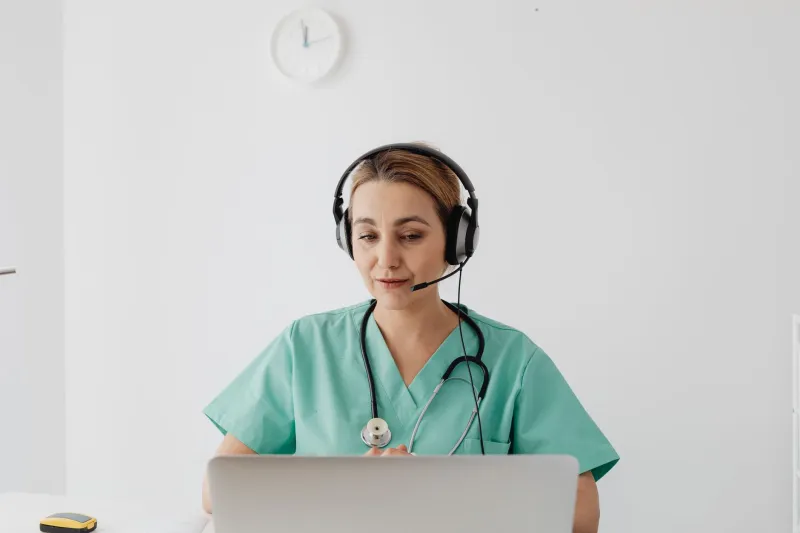
The virtual consultation eliminates several of these competing demands. There is no physical examination to conduct simultaneously. The clinical environment itself — the exam table, the supply cabinets, the overhead lighting — is absent. What remains, in its place, is the conversation.
When Listening Becomes the Primary Instrument
Dr. Michelle Hargrove, an internal medicine physician who transitioned a significant portion of her practice to telemedicine following the pandemic, describes the shift in her own diagnostic process as "almost uncomfortable at first, because I had to relearn how to use my ears."
"In the office, I was always doing something with my hands," she explains. "Online, I had to be completely present to what the patient was telling me. And I started catching things I might have glossed over — a hesitation before answering a question about alcohol use, a patient who mentioned fatigue almost as an afterthought but whose tone changed when they said it."
This phenomenon has a clinical basis. Verbal and paralinguistic cues — the pace of speech, emotional affect, self-correction, the sequencing of symptoms a patient chooses to volunteer — carry substantial diagnostic information. Studies in medical communication have long established that patients often bury their most significant concern beneath a list of secondary complaints, a pattern sometimes called the "doorknob phenomenon" because it tends to emerge as the patient is leaving. In a telemedicine setting, where there is no physical doorknob and no physical departure, the conversation has more room to unfold naturally.
Pattern Recognition Across Time and Data
Another advantage of virtual care platforms involves the longitudinal record. Telemedicine services, including those operating through platforms like Doctor7 Online, maintain detailed consultation histories that are immediately accessible at the start of every visit. A physician reviewing a patient's third or fourth online consultation can observe patterns across months — subtle shifts in reported symptom severity, changes in sleep quality, evolving medication responses — that might not be as readily apparent in a fragmented in-office record.
Dr. James Okafor, a family medicine physician practicing through a telemedicine platform in the Midwest, describes a case in which a patient consulted him four times over six months for what appeared to be recurring sinus infections. "Looking at the pattern across all four visits, I noticed the timing correlated with her work schedule and that she consistently mentioned fatigue and joint aches that she attributed to being run down," he recalls. "That pattern, visible because I had all four records in front of me simultaneously, led me to order an ANA panel. She was eventually diagnosed with early-stage lupus."
The diagnosis had been elusive not because any individual symptom was obscure, but because the pattern only became visible when viewed across time — something the telemedicine platform's integrated record structure made easier to accomplish.
The Patient-at-Home Advantage
There is also the matter of where the patient is sitting. In a clinic, a patient is in an unfamiliar, often anxiety-inducing environment. Blood pressure readings are notoriously elevated in clinical settings — a phenomenon so well-documented it has its own name, white coat hypertension — and patient self-reporting is known to be influenced by social desirability bias, the tendency to present oneself favorably in front of authority figures.
At home, patients are frequently more relaxed and more candid. They have access to their actual medication bottles, which they can hold up to the camera rather than attempting to recall dosages from memory. They may describe their living environment in ways that prove clinically relevant — a patient who mentions, unprompted, that their apartment has had water damage provides a physician with an important environmental context for respiratory symptoms that would not have surfaced in an exam room.
Some physicians report that patients in home settings are also more likely to involve family members in the conversation, providing collateral history that can be diagnostically significant, particularly in cases involving cognitive symptoms or mental health concerns.
What This Does Not Replace
None of this is an argument for abandoning in-person medicine. There are clinical presentations — chest pain with hemodynamic instability, an acute abdomen, a wound requiring direct assessment — where the physical examination is not optional. The physician's ability to auscultate, percuss, and palpate remains essential across a wide range of diagnostic scenarios.
The more accurate framing is that telemedicine and in-person care are not competing modalities but complementary ones, each with a distinct diagnostic profile. The question a clinician — and a patient — should be asking is not which is better in the abstract, but which is better for this particular presentation at this particular moment.
A Rethinking of Clinical Attention
What the telemedicine experience has revealed, for many physicians, is that diagnostic quality is not solely a function of physical access to the patient. It is also a function of attention — the depth and quality of focus a clinician can bring to the information in front of them.
In an environment where that attention is not fractured by procedural demands, some physicians are finding that they listen more carefully, notice more precisely, and reason more deliberately. That is not a minor footnote to telemedicine's clinical value. For patients who have spent years feeling unheard in brief office visits, it may be the most important advantage of all.
If you have questions about whether a virtual consultation is appropriate for your current health concern, the licensed physicians at Doctor7 Online are available to discuss your situation and help determine the right course of care.