After Midnight, Before the ER: What a 2 A.M. Virtual Doctor Visit Can — and Cannot — Do for You

Most medical problems do not schedule themselves around office hours. A fever spikes in a toddler at midnight. Anxiety crests in the small hours when the house is quiet and worries grow loudest. Chest tightness, a worsening cough, a medication question that cannot wait until morning — these moments arrive precisely when most clinics are dark and answering machines are on.
For generations of Americans, the default answer was the emergency department. But a shift is underway: licensed physicians are now staffing virtual consultations around the clock, and the overnight hours — once a dead zone for non-emergency care — are becoming one of telemedicine's most practical frontiers.
Why Symptoms Flare After Dark
The timing is not coincidental. Physiologically, several conditions intensify at night. Fevers tend to rise in the evening and early morning hours as the body's temperature regulation shifts. Asthma symptoms frequently worsen between midnight and 4 A.M., when airway function naturally dips. Acid reflux, earaches, and certain pain conditions similarly track the body's circadian rhythm.
Psychological distress follows its own after-hours pattern. With daytime distractions removed, anxiety and racing thoughts often intensify. Insomnia, by definition, announces itself at night — and a person lying awake at 2 A.M. with mounting distress has historically had exactly one option: wait it out or go to the ER.
Parents of young children know this dynamic intimately. A child who seemed slightly off at bedtime can look alarmingly unwell at 1 A.M., and parental concern does not degrade gracefully until sunrise.
Who Is on the Other End of the Screen at 2 A.M.?
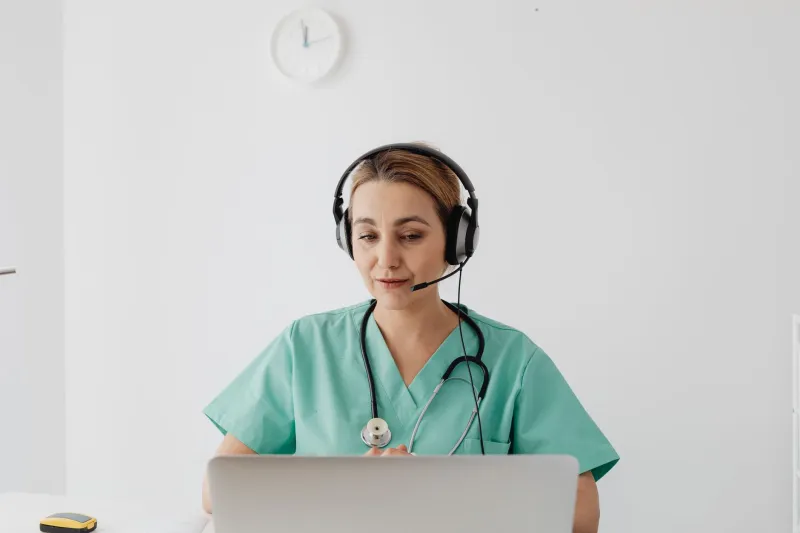
A common misconception is that overnight virtual visits connect patients with chatbots, triage scripts, or overseas call centers. In legitimate telemedicine platforms, overnight consultations are conducted by licensed physicians — many of them practicing emergency medicine, family medicine, or urgent care — who are credentialed to evaluate patients in the states where those patients are located.
These physicians work overnight shifts much as hospitalists and ER physicians do. The difference is the setting: instead of a trauma bay, they have a video connection, a structured clinical interview, and the ability to review symptoms, vital signs a patient can report or measure at home, and medication lists.
What to Realistically Expect From an Overnight Consultation
A 2 A.M. virtual visit is not a substitute for emergency care, and reputable platforms are explicit about that boundary. Patients should expect the physician to do three things:
Assess urgency. The first task is triage. If symptoms suggest something dangerous — stroke signs, crushing chest pain, difficulty breathing, severe dehydration in an infant — the physician will direct the patient to call 911 or get to an emergency department immediately. This alone is valuable: a significant share of overnight ER visits for non-emergencies could be resolved elsewhere, but distinguishing the two requires clinical judgment.
Evaluate and advise. For concerns that are genuinely appropriate for virtual care — a low-grade fever in an otherwise well child, a panic episode, an allergic reaction that has already resolved, a medication side-effect question — the physician can conduct a focused evaluation, offer a diagnosis or working assessment, recommend home treatment, and in many cases issue a prescription when clinically appropriate.
Set a follow-up plan. Good overnight care includes clear instructions on what should trigger escalation, and often a recommendation to follow up with a primary care physician or a daytime virtual visit.
Patients can make these visits more effective by preparing basics in advance: a thermometer reading, a list of current medications, the child's weight if pediatrics is involved, and a well-lit space where a physician can visually examine a rash, a throat, or an injury.
The Quiet Case Against the 3 A.M. Emergency Room
Emergency departments are the backbone of American acute care, but they are an expensive and inefficient answer to many overnight concerns. Non-emergency ER visits routinely generate bills in the thousands of dollars, involve hours of waiting, and expose families to waiting rooms full of contagious illness — all for a problem a physician could have addressed by video.
The financial argument is only part of it. Overnight virtual care also keeps emergency capacity free for genuine emergencies, reduces unnecessary testing that sometimes follows when an ER must rule things out defensively, and lets patients — especially children — be evaluated in their own beds rather than under fluorescent lights.
Health systems and insurers have noticed. Coverage for telemedicine has broadened substantially, and 24/7 virtual access is increasingly treated as a front-door alternative rather than a novelty.
Knowing the Line
The most important skill for patients in the 24/7 era is recognizing when a screen is not enough. Severe or worsening symptoms, chest pain, stroke warning signs, uncontrolled bleeding, difficulty breathing, and any infant under a few months old with a fever all demand in-person emergency evaluation — immediately.
For everything in the gray zone — the fever that is concerning but not alarming, the panic attack, the mystery rash, the question that will not let you sleep — the overnight virtual visit has quietly become the sensible middle option between waiting until morning and defaulting to the ER.
Care that answers at 2 A.M. does not replace the emergency room. It simply gives Americans a better first call.